Rome had been high on my list of places to paint for some time. Like many visitors, I was struck by the feeling that Rome exists on a scale that other Italian cities don’t. Not to mention the juxtaposition of titanic ancient structures and Renaissance opulence. I actaully like a lot of the fascist architecture too, aesthetically speaking. I had thought before I went that it would be these strange marriages that I’d seek out – baroque facades built on top of temple ruins; the crumbling walls of a bath house neatly coddled inside a busy roundabout; a warm sunset on the eery geometric columns in EUR. Instead, after a couple of weeks my painting became more programmatic than it usually is as I struck upon some themes I sought out across the whole body of work.
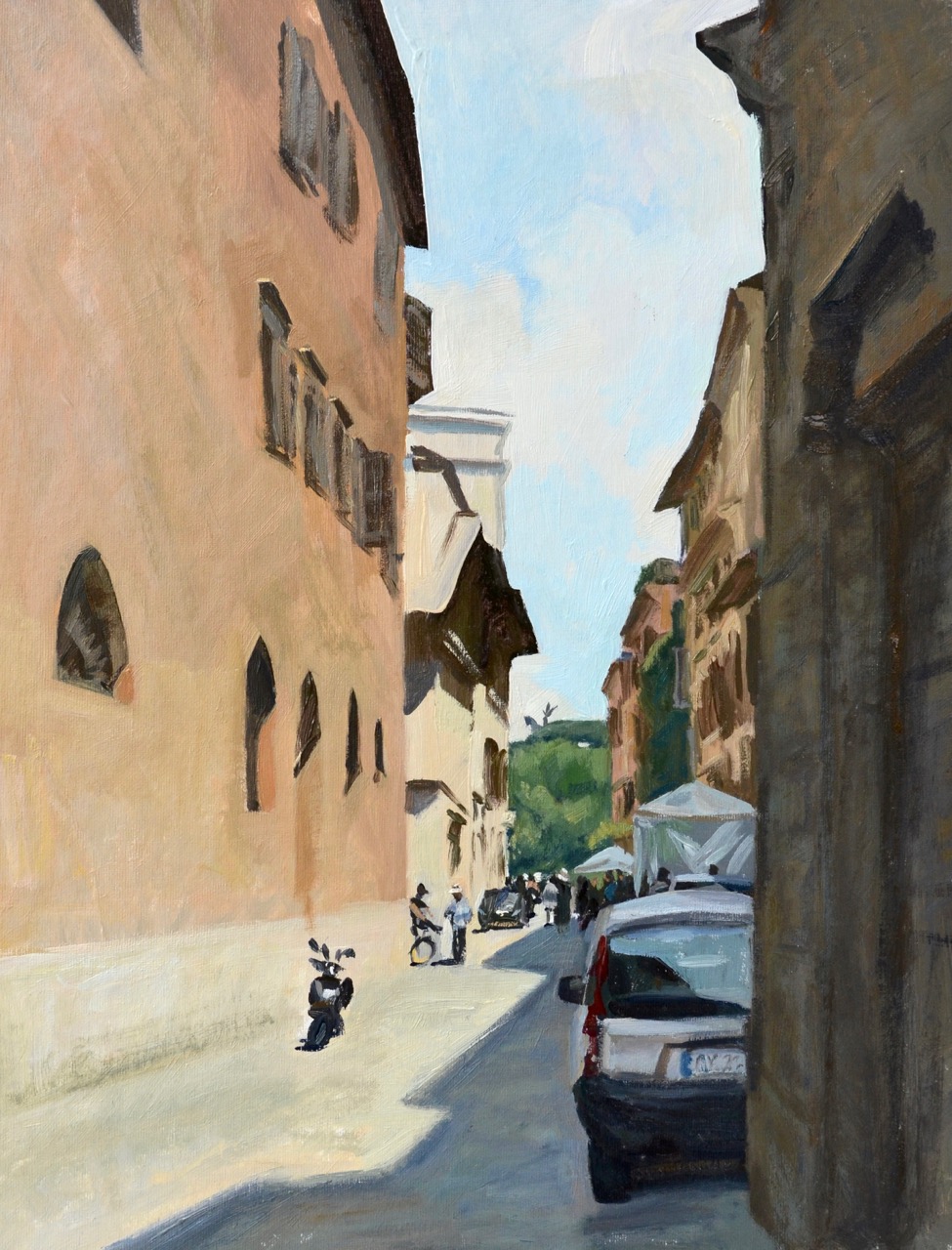
Via dei Vascellari 30×40 cm
I’d started off by painting in and around Trastevere, trying to avoid the crowds by seeking out narrower streets.

Via Garibaldi i 25×35 cm

Vicolo di Santa Maria in Cappella 25×35 cm

Via Garibaldi ii 30×40 cm
I also had a bash at what I thought more typically Roman subjects and views.

In Monti 30×40 cm
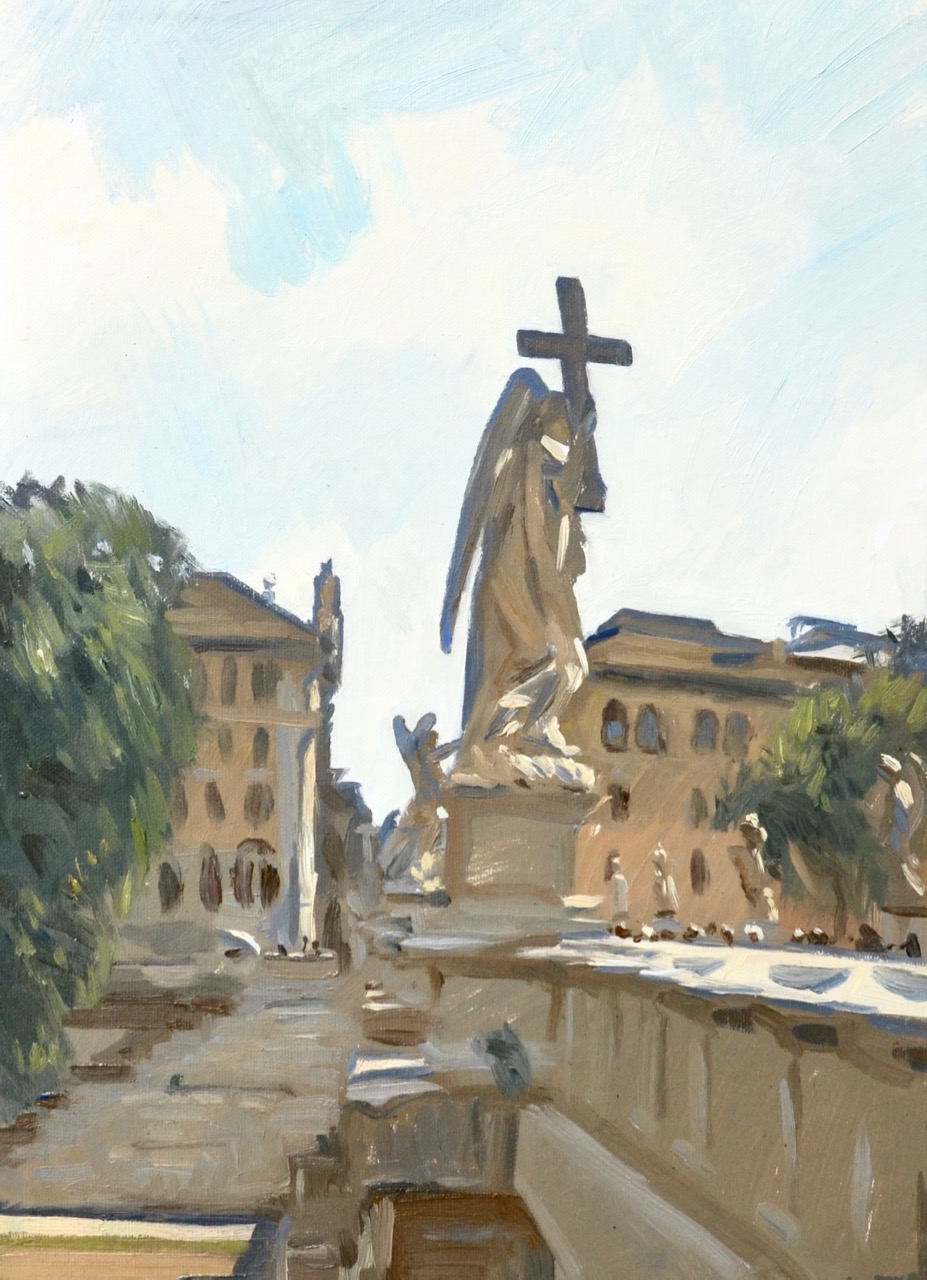
Ponte Sant’Angelo 25×35 cm
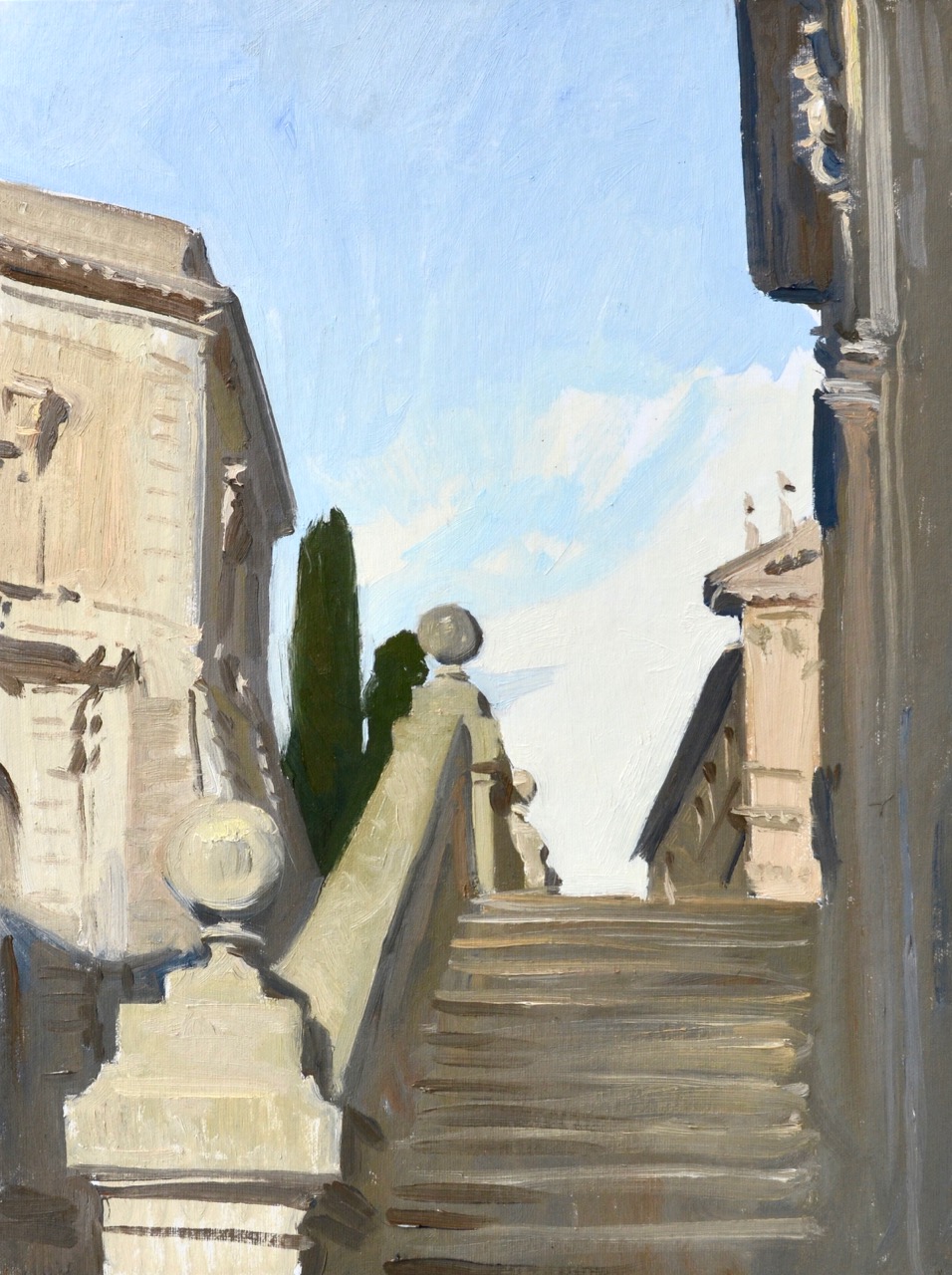
Largo Angelicum 30×40 cm
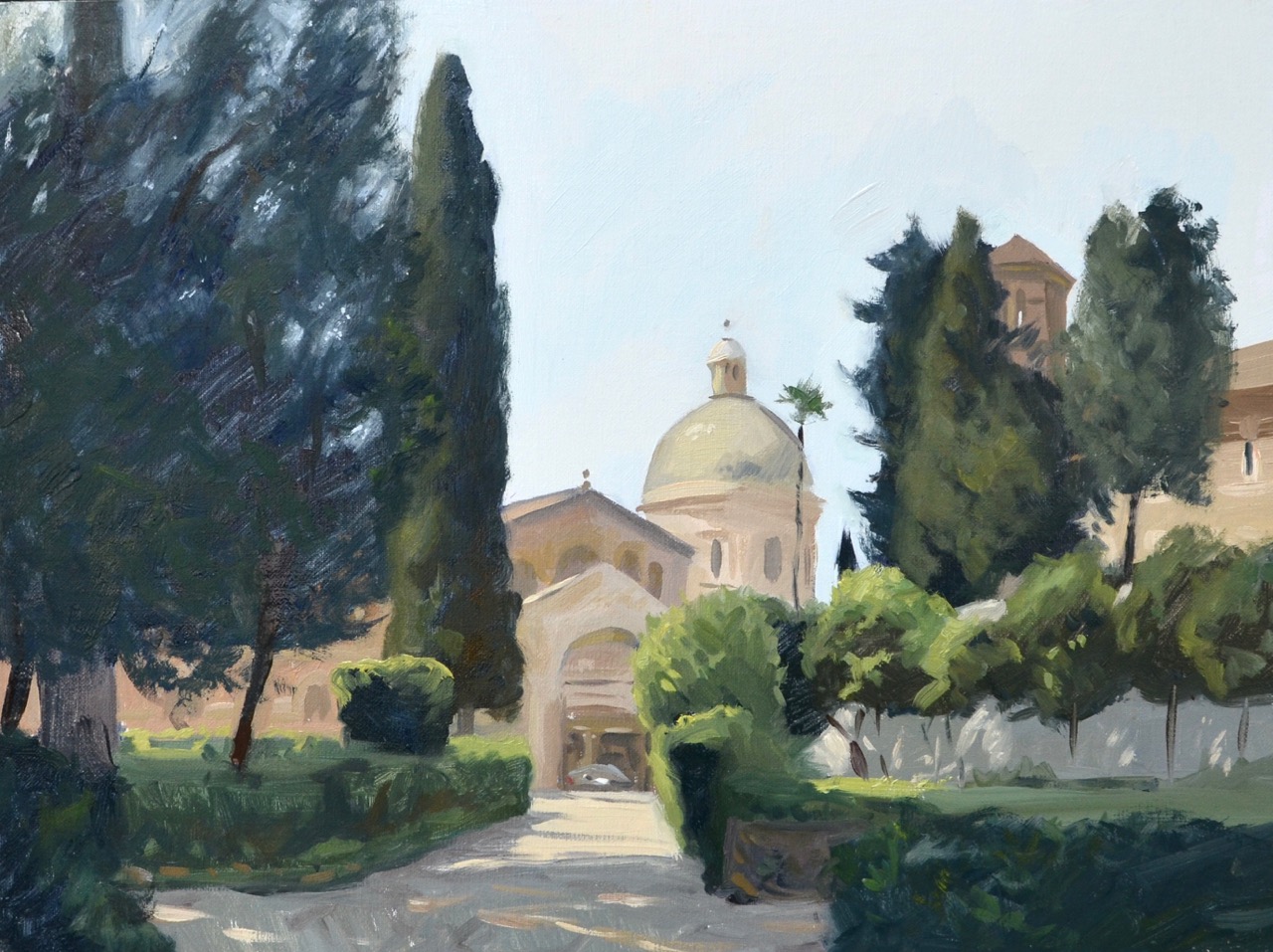
Santi Giovanni e Paolo from Villa Celimontana 30×40 cm
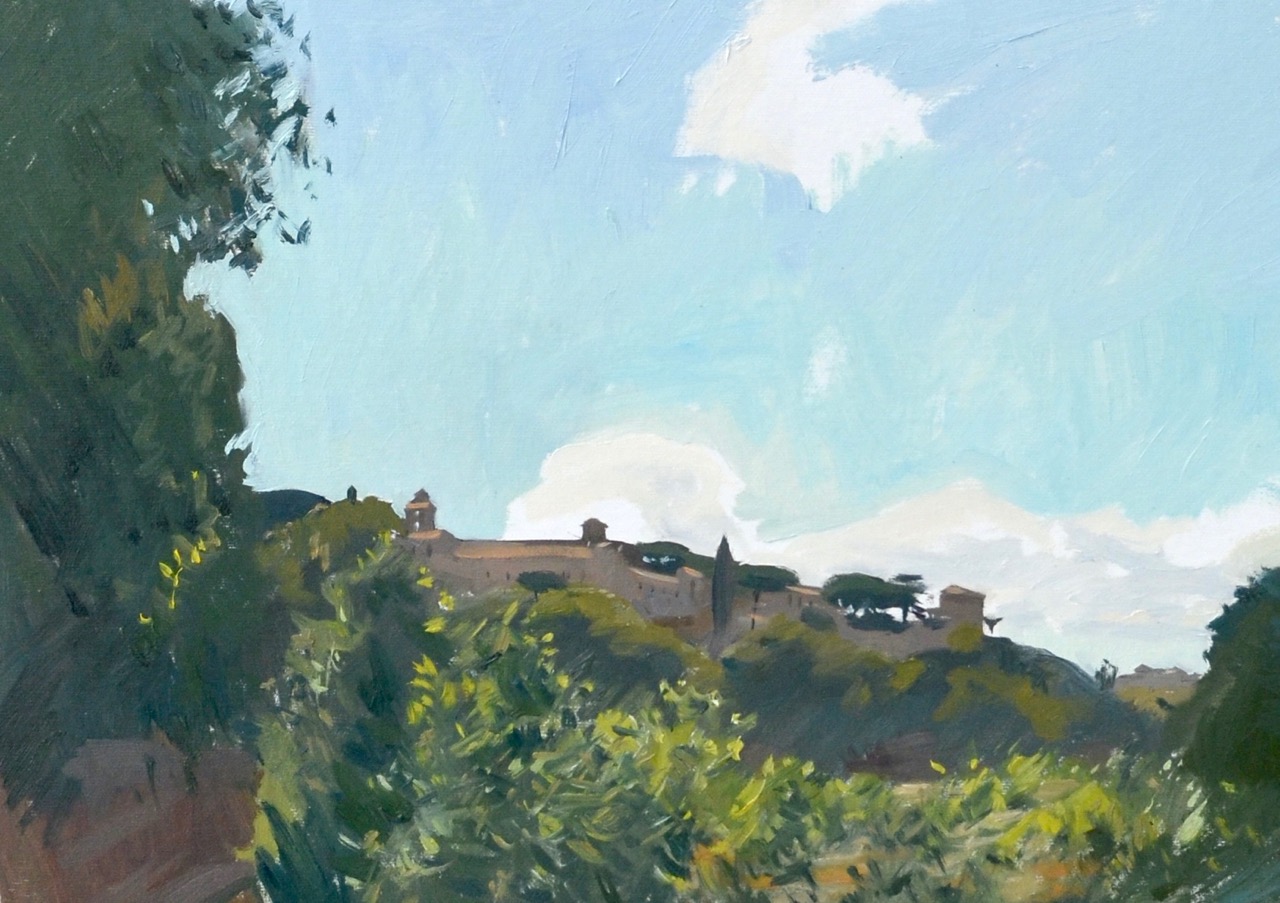
Giardino degli Aranci from the Ponte Palatino 25×35 cm
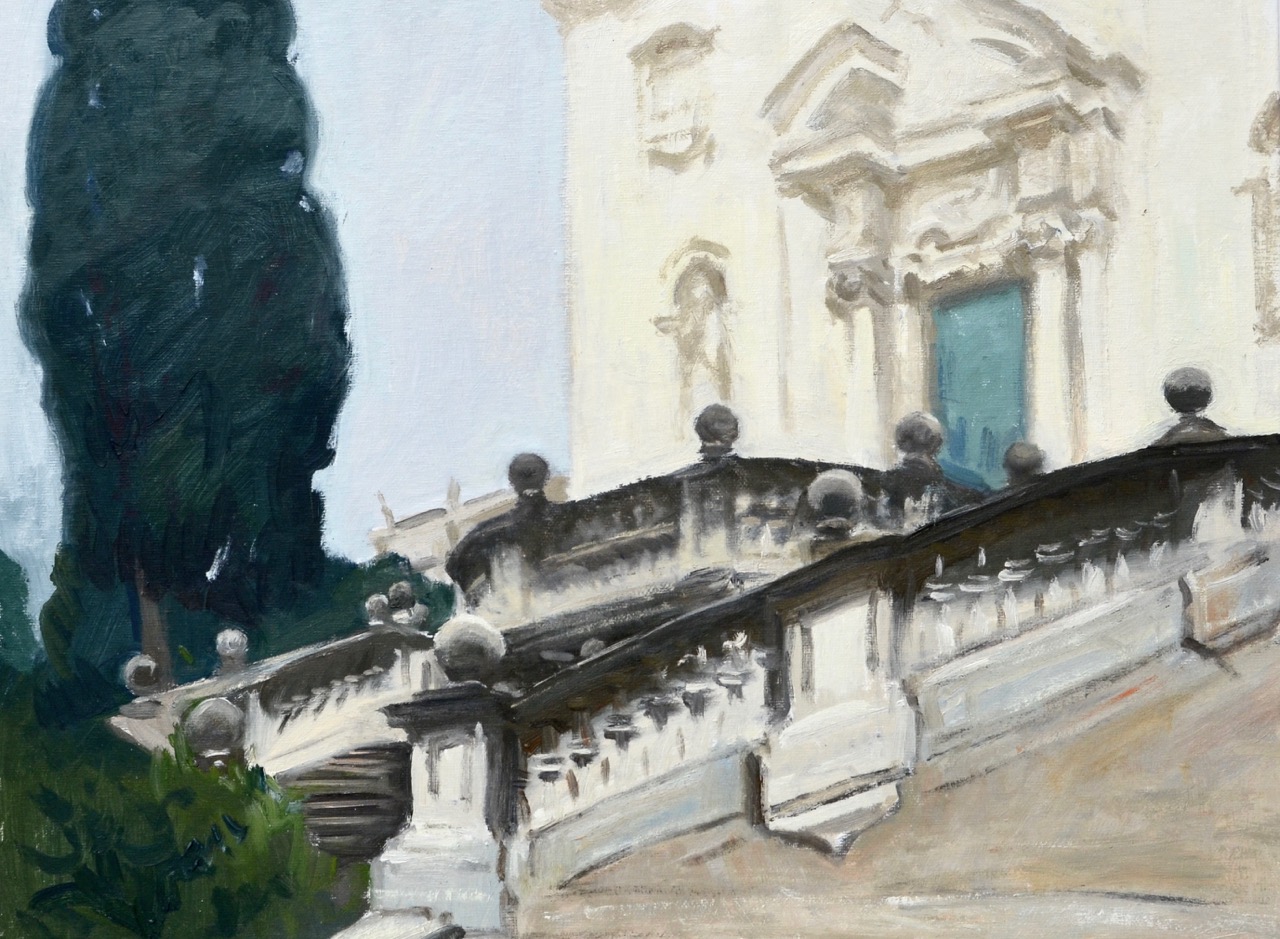
San Bernardino in Panisperna 30×40 cm
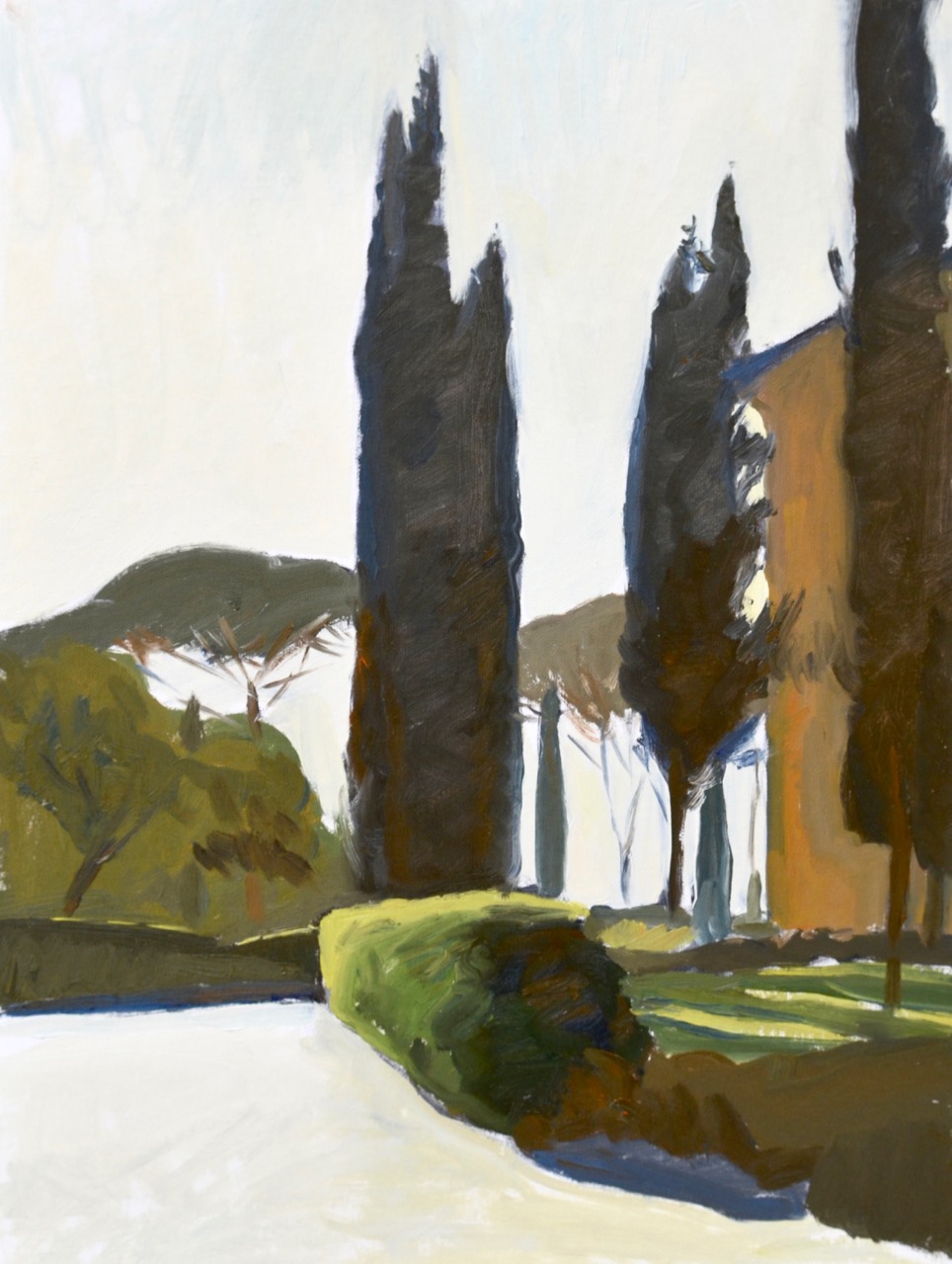
Cypresses near San Sebastian 30×40 cm
I also met up with local artists and made it out of town a couple of times. My friend Kelly Medford knows all the good spots.
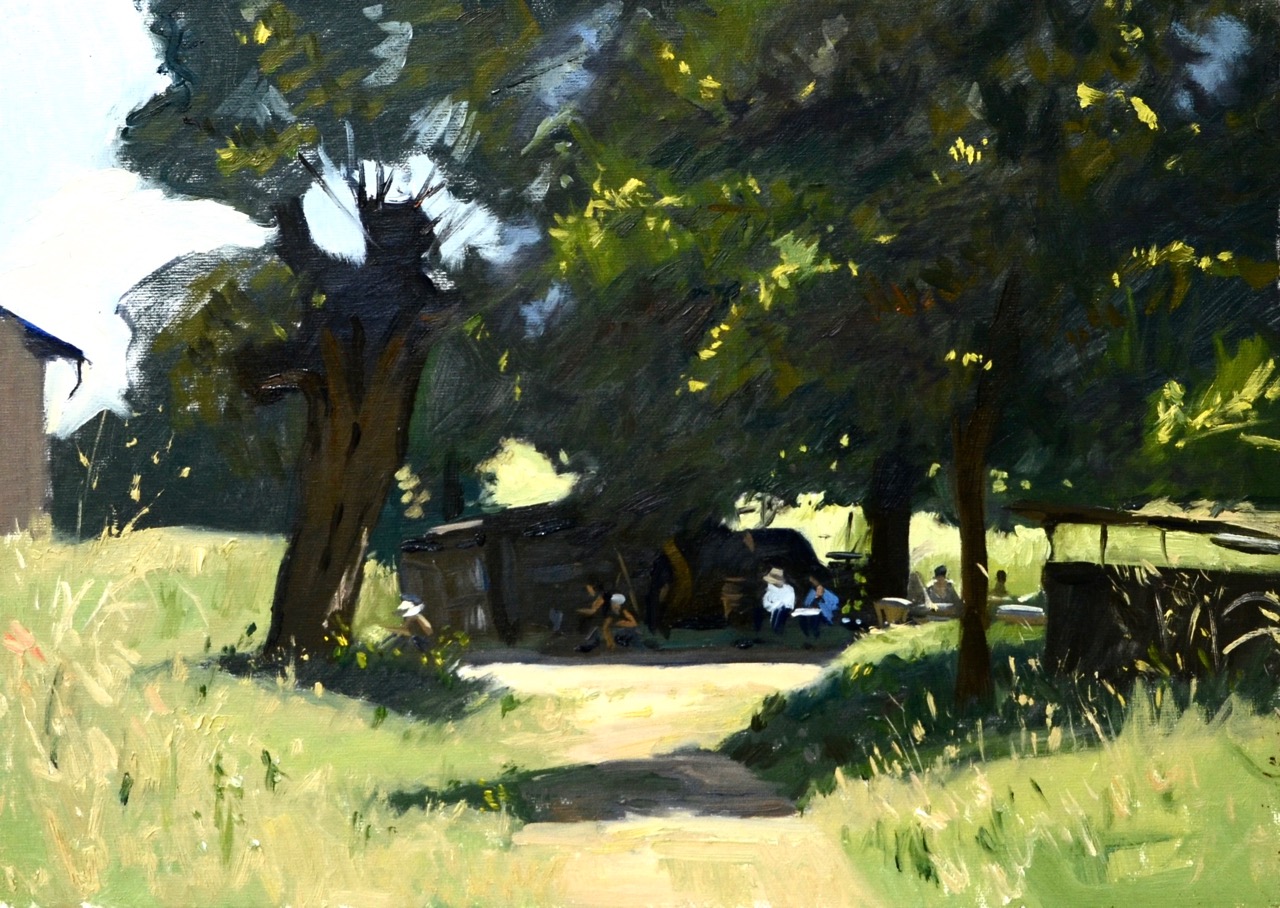
Sketchers in the Campagna 25×35 cm

Farmhouse in the Campagna 25×35 cm
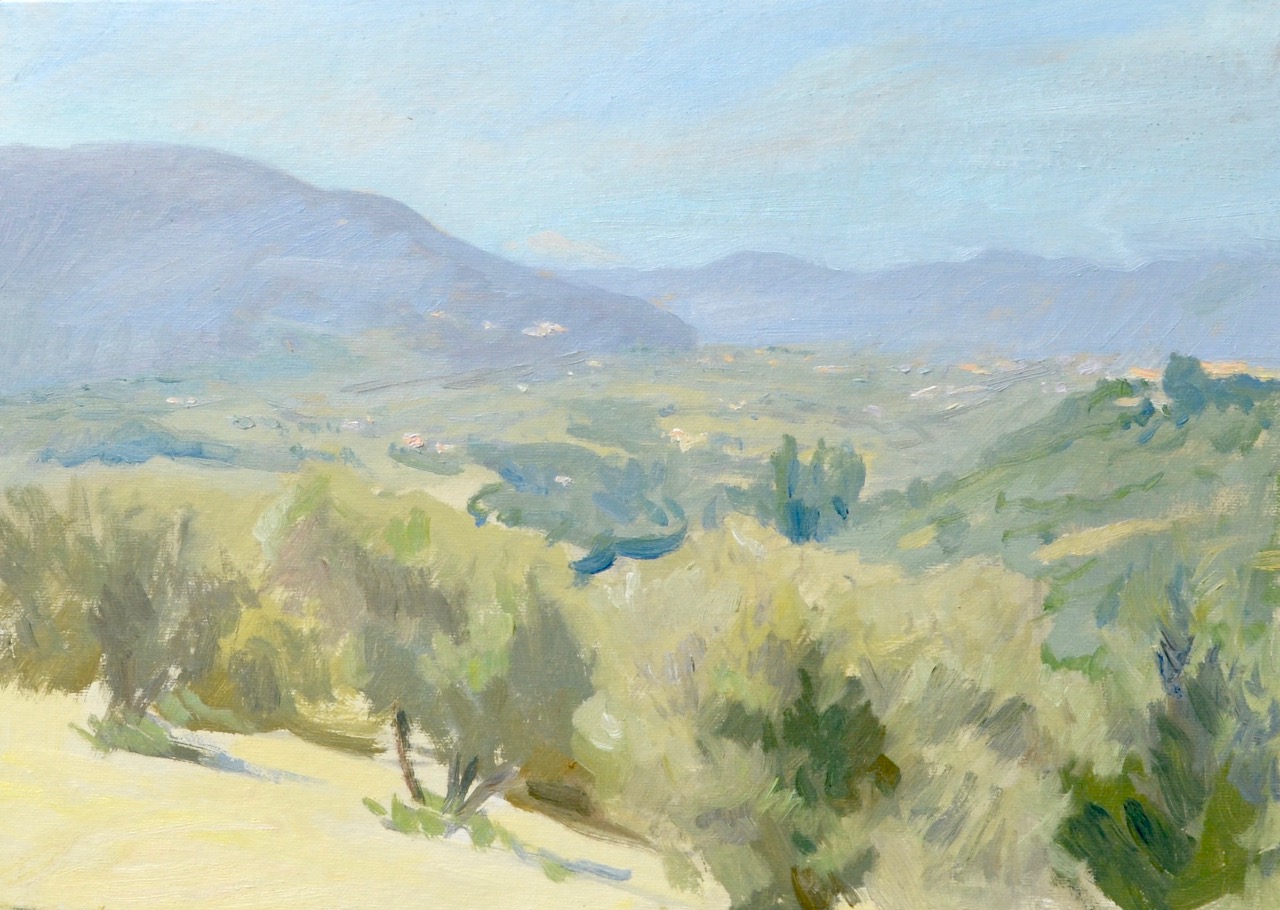
In the Sabine Hills 25×35 cm
I then started to think slightly differently about my compositions. I began paring down to focus more on individual objects or single elements.

Headless Statue in Villa Celimontana 25×35 cm
(I couldn’t resist painting this during one of the many weeks Italy was without a government during my stay.)

S. Giovanni Addolorata 25×30 cm
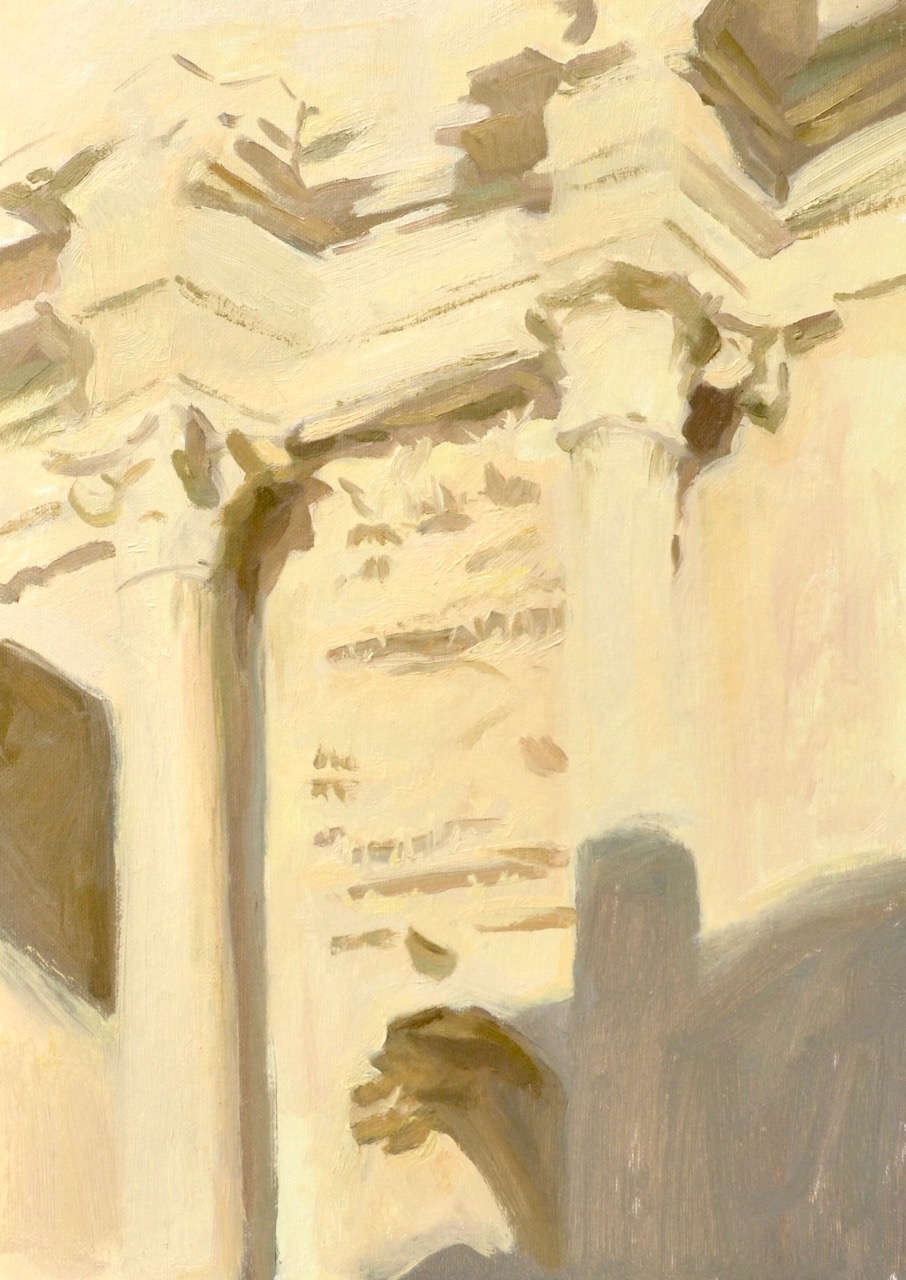
Arch of Septimus Severus 25×35 cm
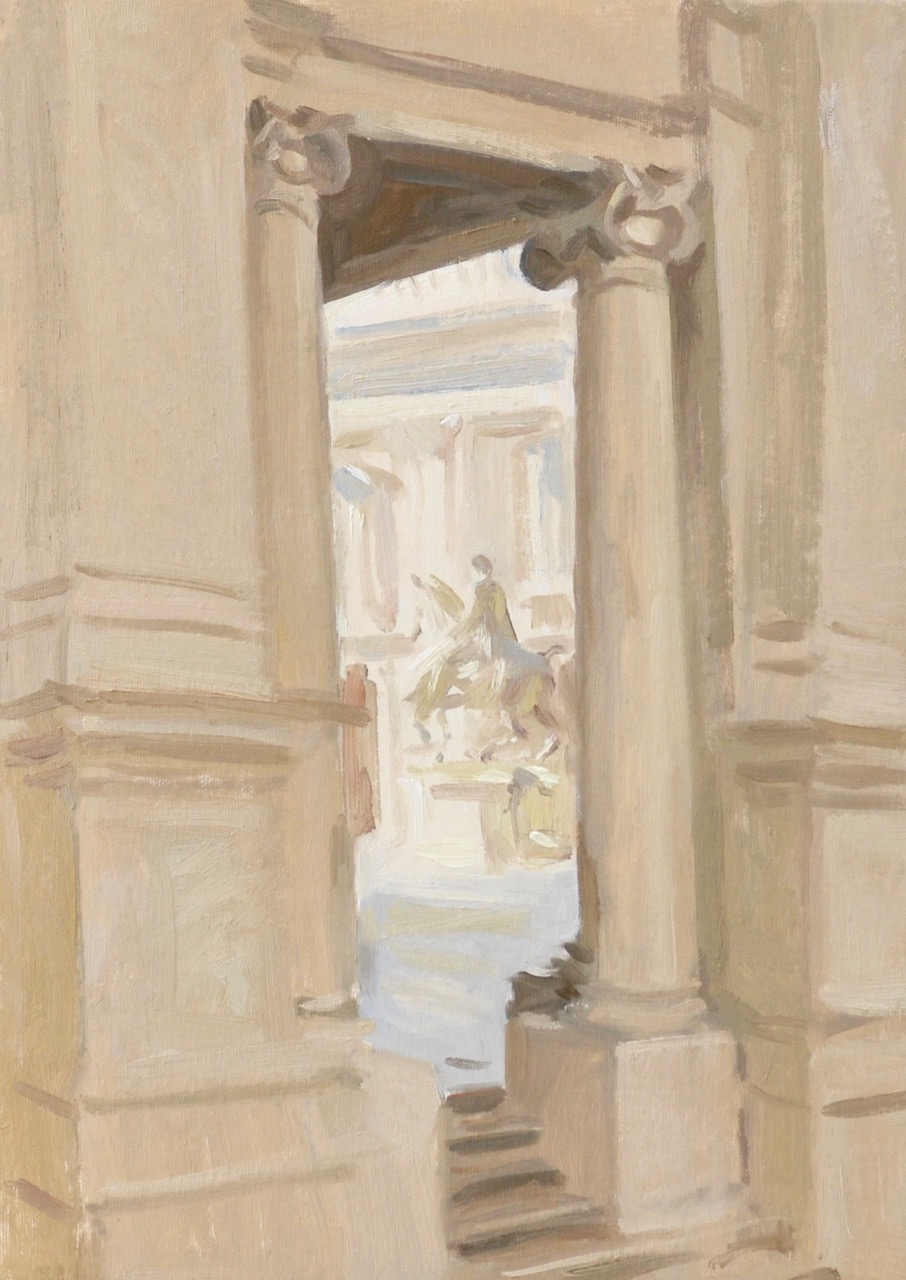
Marcus Aurelius in the Campidoglio 25×35 cm
I really liked the composition of this picture but I was set up on the steps just next to the Capitoline Museum and was promptly booted off. In fairness they said I could carry on painting so long as I didn’t use an easel but after so many years that habit was hard to kick.
I began taking the individual elements I was looking at and moving them around to see what became more or less dynamic.

Fontana delle Naiadi sketch i 25×30 cm
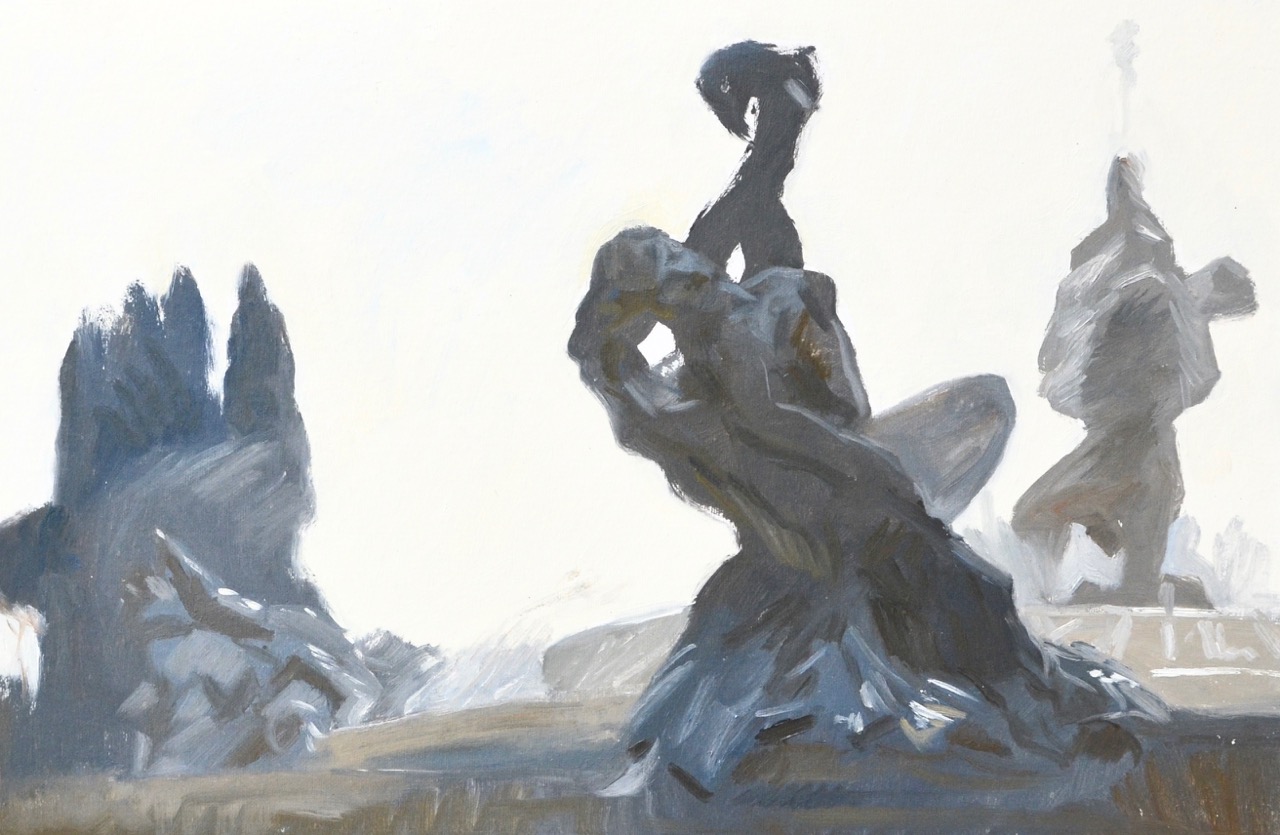
Fontana delle Naiadi sketch ii 30×50 cm
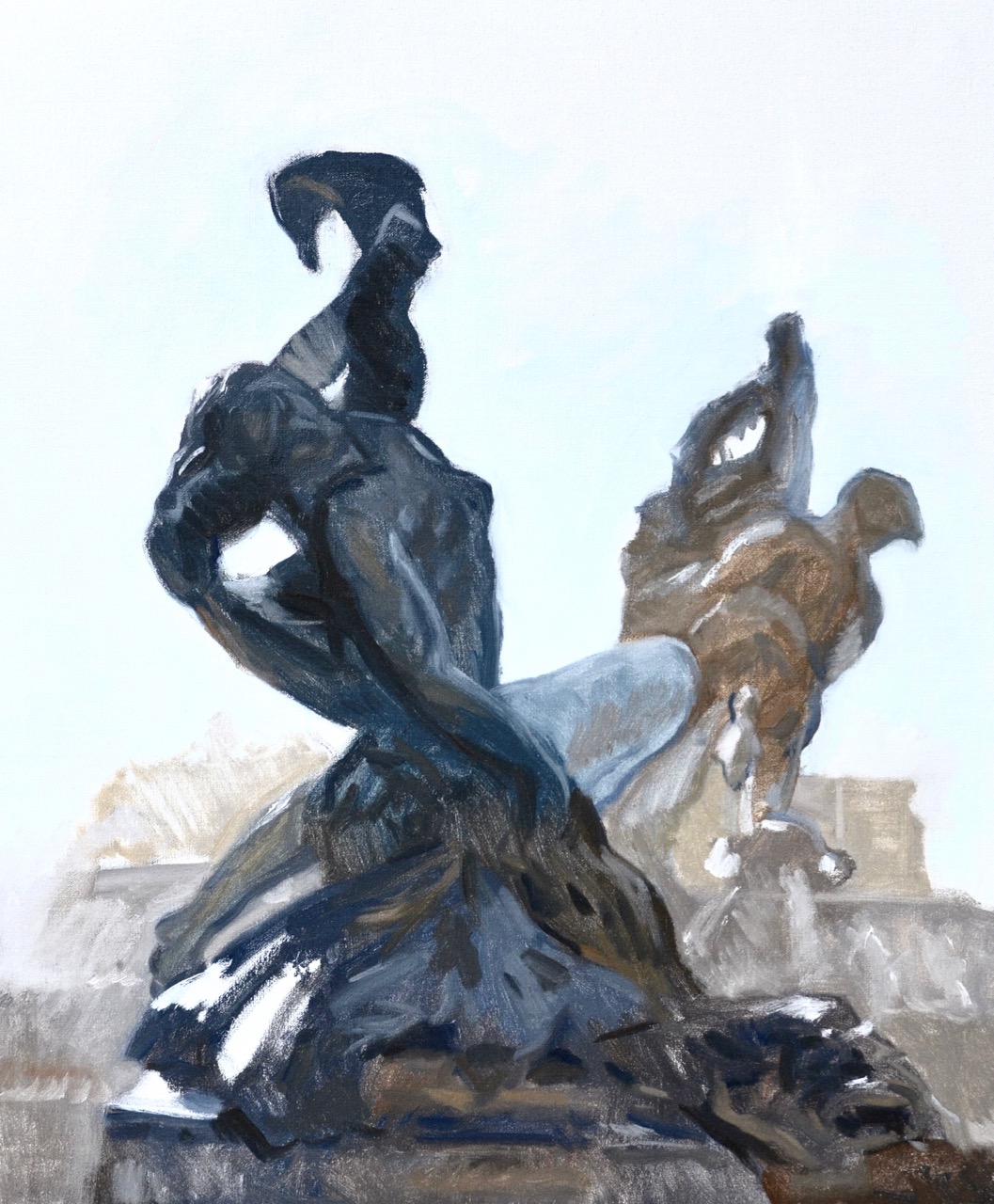
Fontana delle Naiadi 50×60 cm
I then struck upon the idea of not only focussing on specific elements of views, but to crop them aggressively.
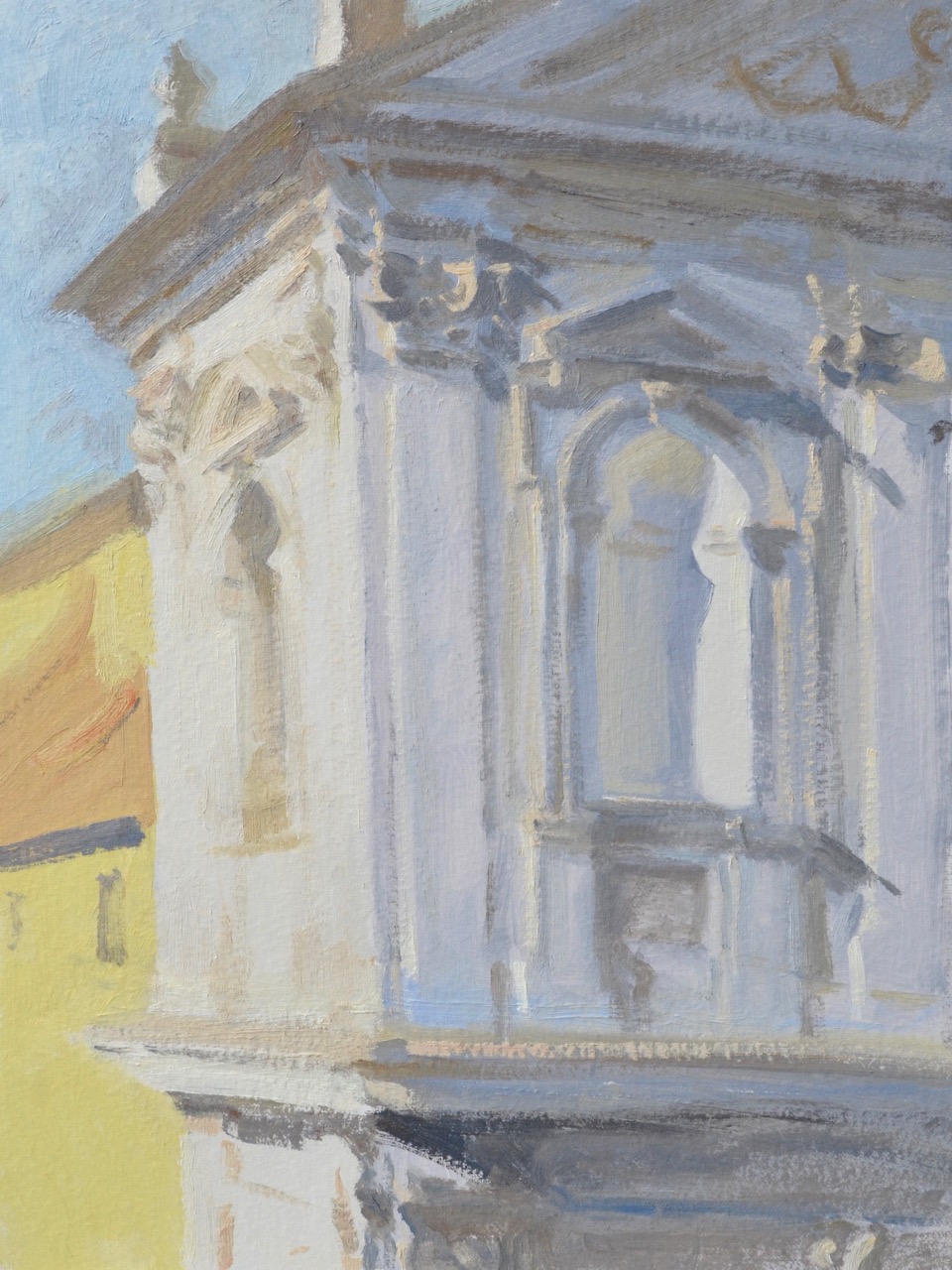
Santa Caterina da Siena 30×40 cm

Corte Suprema di Cassazione 30×40 cm
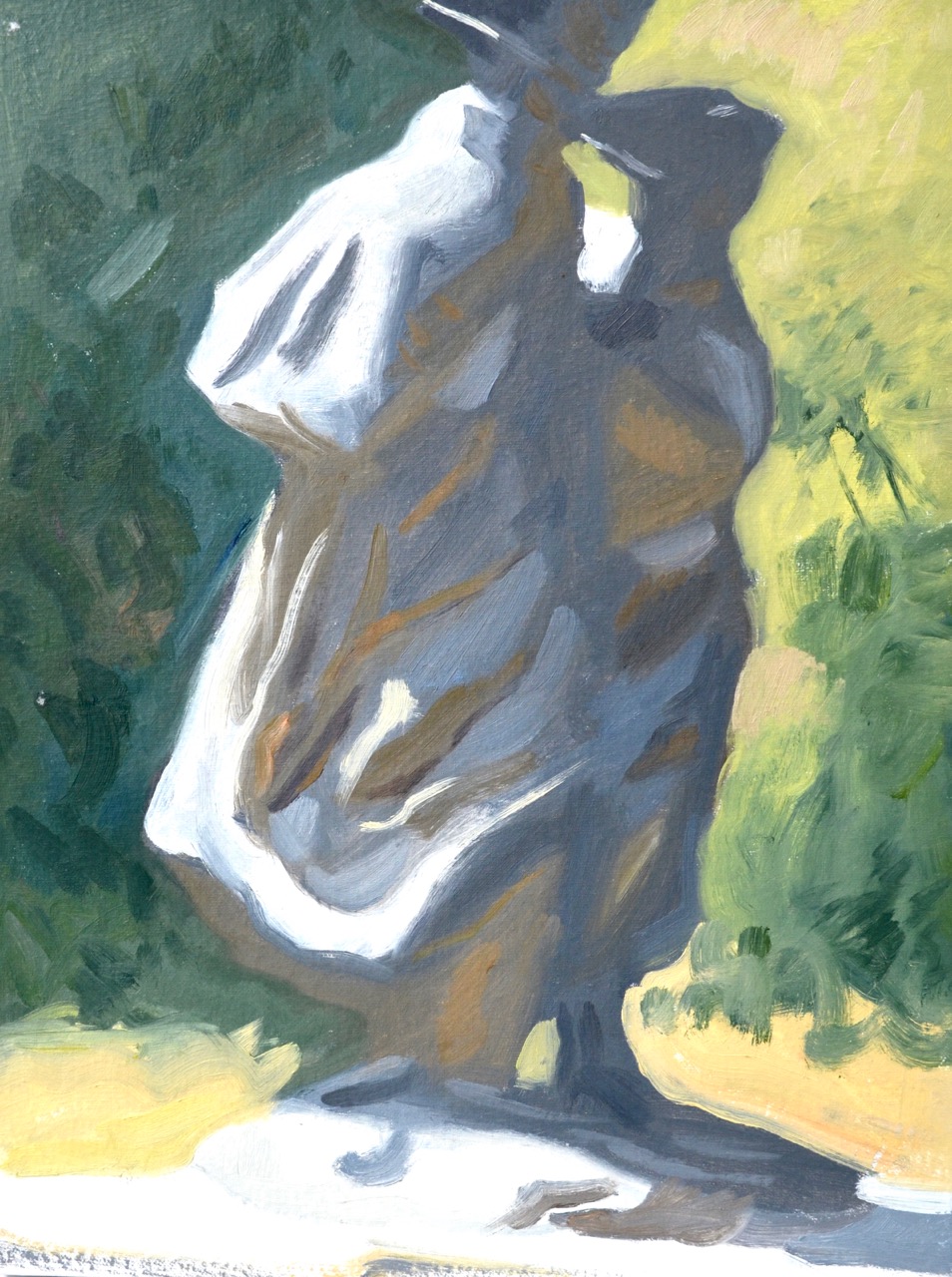
Monument to the Carabinieri 30×40 cm
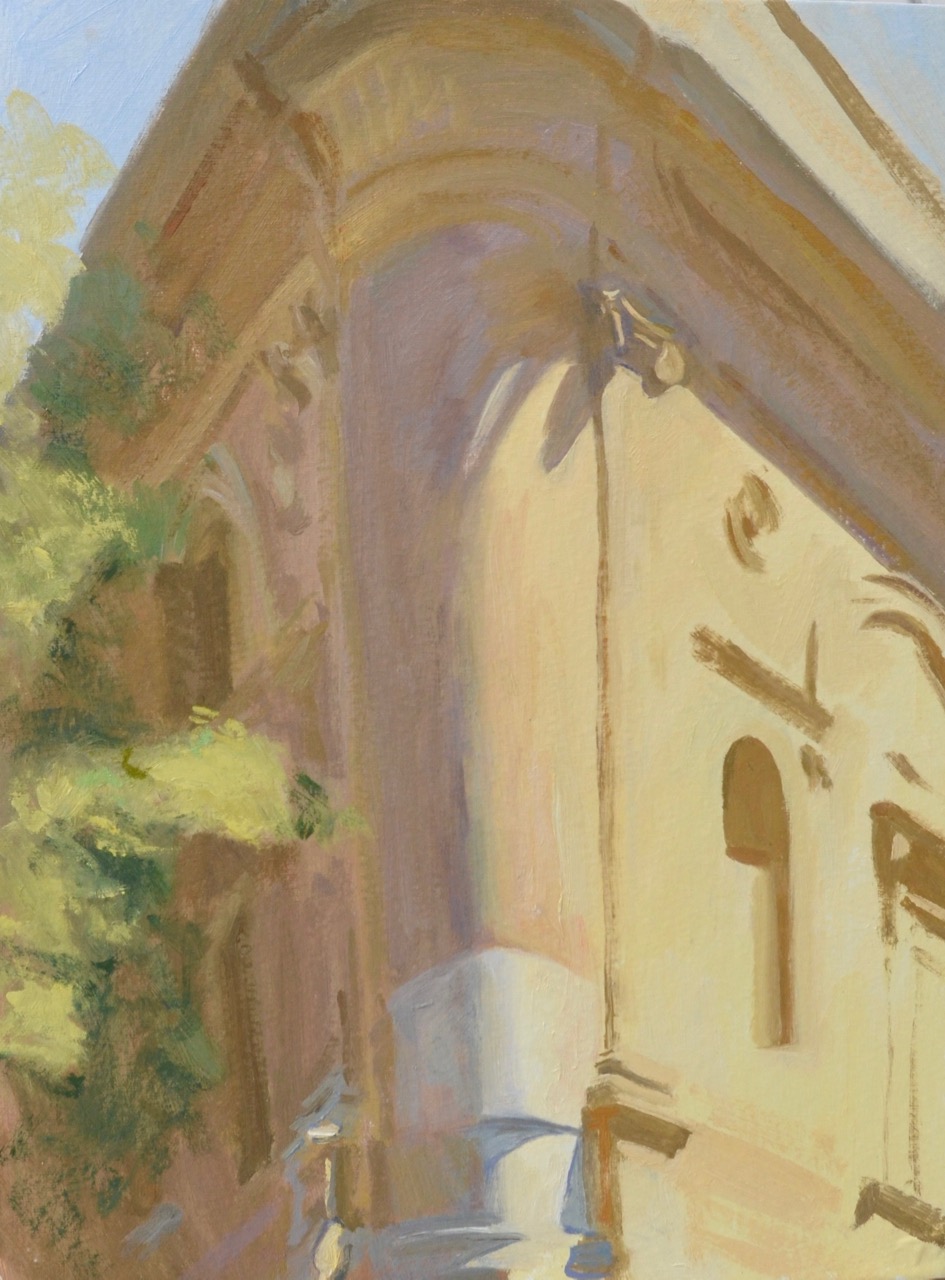
Building in Trastevere 30×40 cm
One is usually trying as a landscape painter not to be subject-driven but to seek out compositions based on pictorial elements such as tonal arrangement, colour harmonies or a variety of shapes. I found that close-cropping to focus only on the specific element I was interested in can actually be quite liberating. The Corte Suprema di Cassation (The Supreme Court) is widely considered to be the ugliest building in Rome and I can see why. The over-rustification of the surfaces in an attempt to convey the fortitude and permanence of the seat of justice is mis-matched with the scale of the building so that at a distance, rather than appearing solid and dense, the whole thing looks like it’s covered in barnacles and faintly ridiculous. Up close however, taking in just a corner of it, I found it strangely beautiful and that picture is probably my favourite of the lot. I found that by de-contextualising specific elements, a dynamism can start to appear on the canvas. At least, that was my theory.

Entrance to San Lorenzo in Panisperna 25×35 cm

Ruined Capital in the Imperial Forums 30×40 cm

Architectural study of Santi Luca e Martina 40×60 cm

Teatro Marcello 40×60 cm
I lived on the edge of Monti near the Papal Basilica Santa Maria Maggiore which became a bit of an obsession. It’s got a suitably ornate baroque facade which I ignored completely in favour of the magnificent apse protruding from the rear. I tried to use the angles created by the drum shape against the flat of the wall to create dynamic movement.
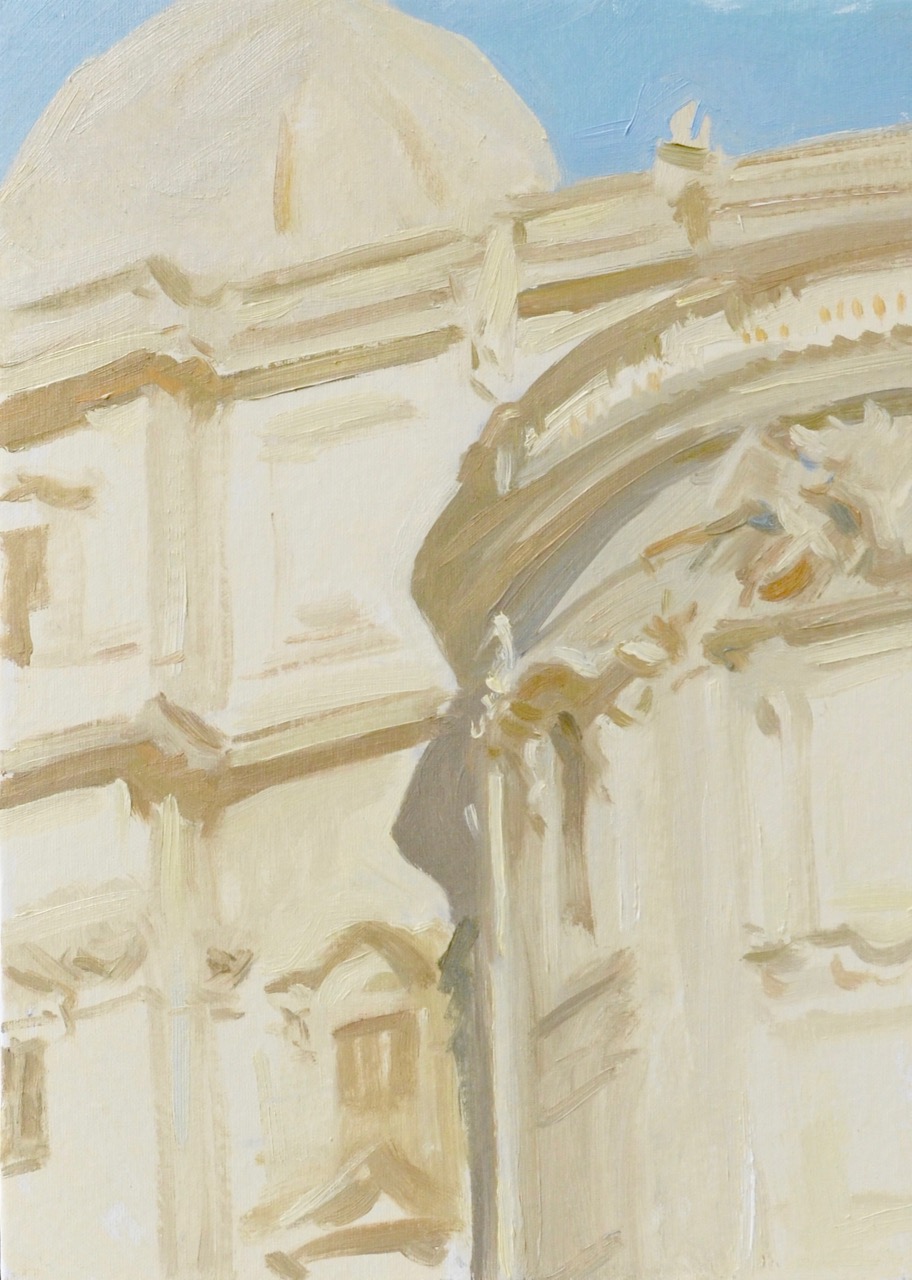
Santa Maria Maggiore i 25×35 cm

Santa Maria Maggiore ii 50×70 cm
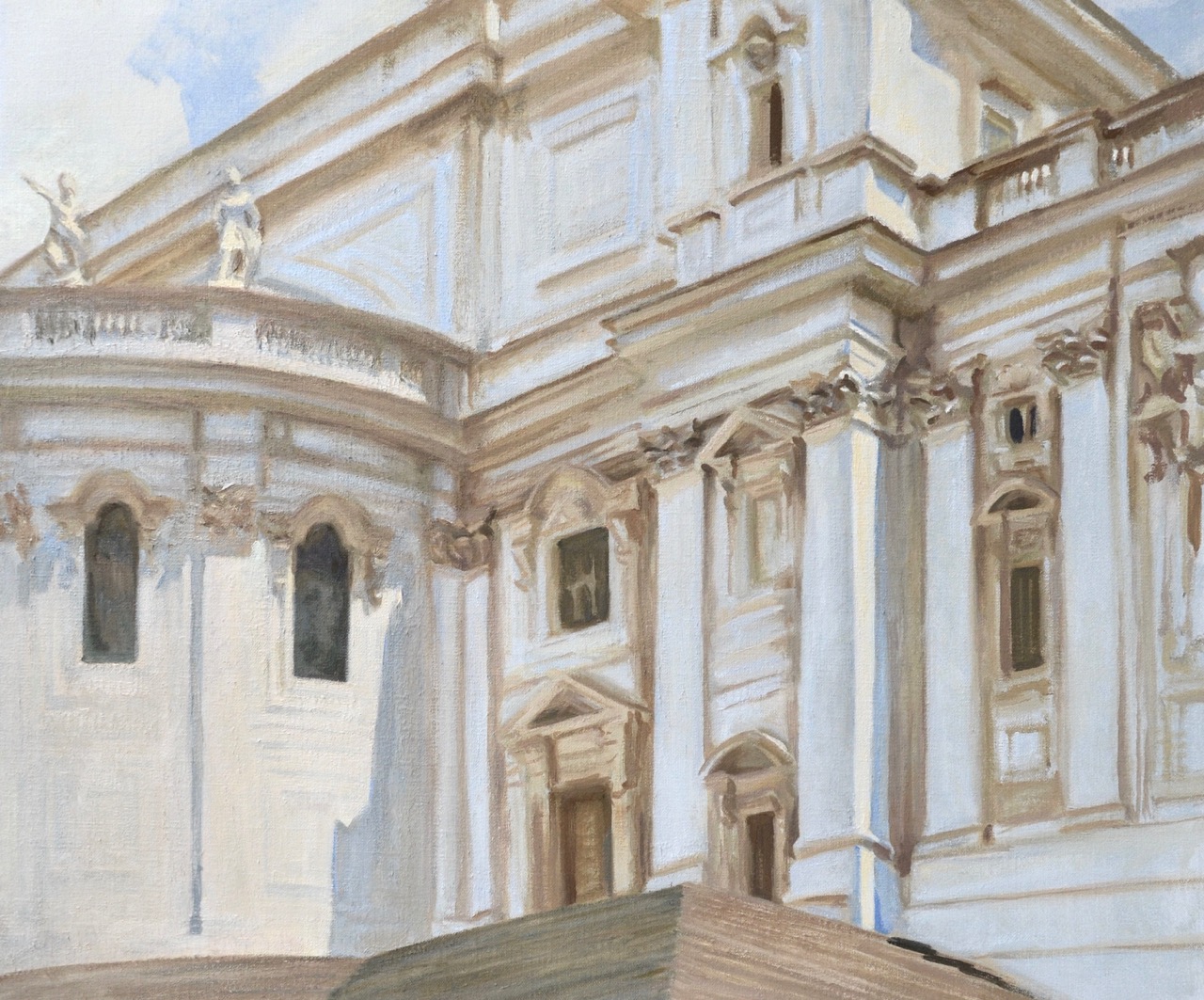
Santa Maria Maggiore iv 50×60 cm
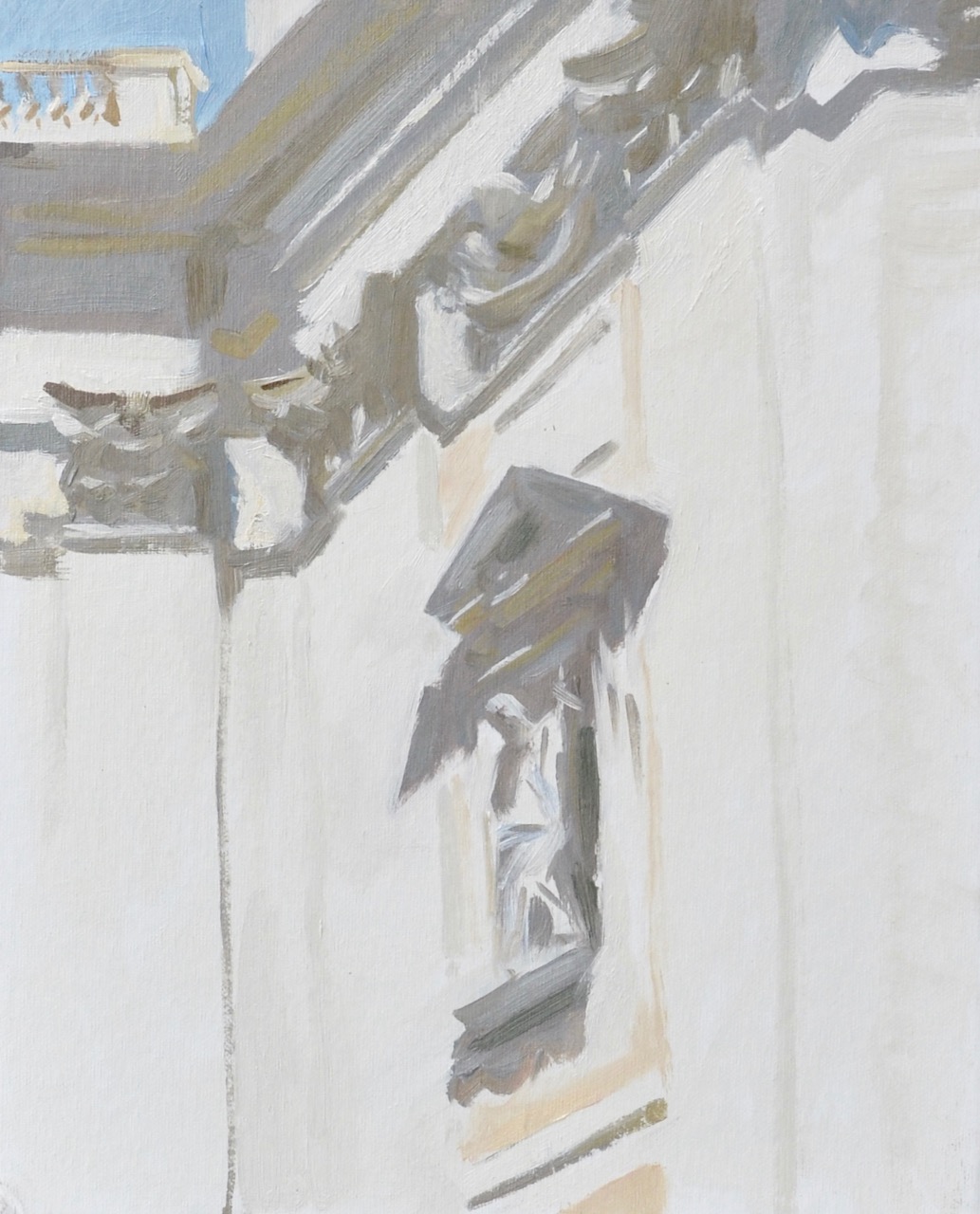
Santa Maria Maggiore niche 25×35 cm
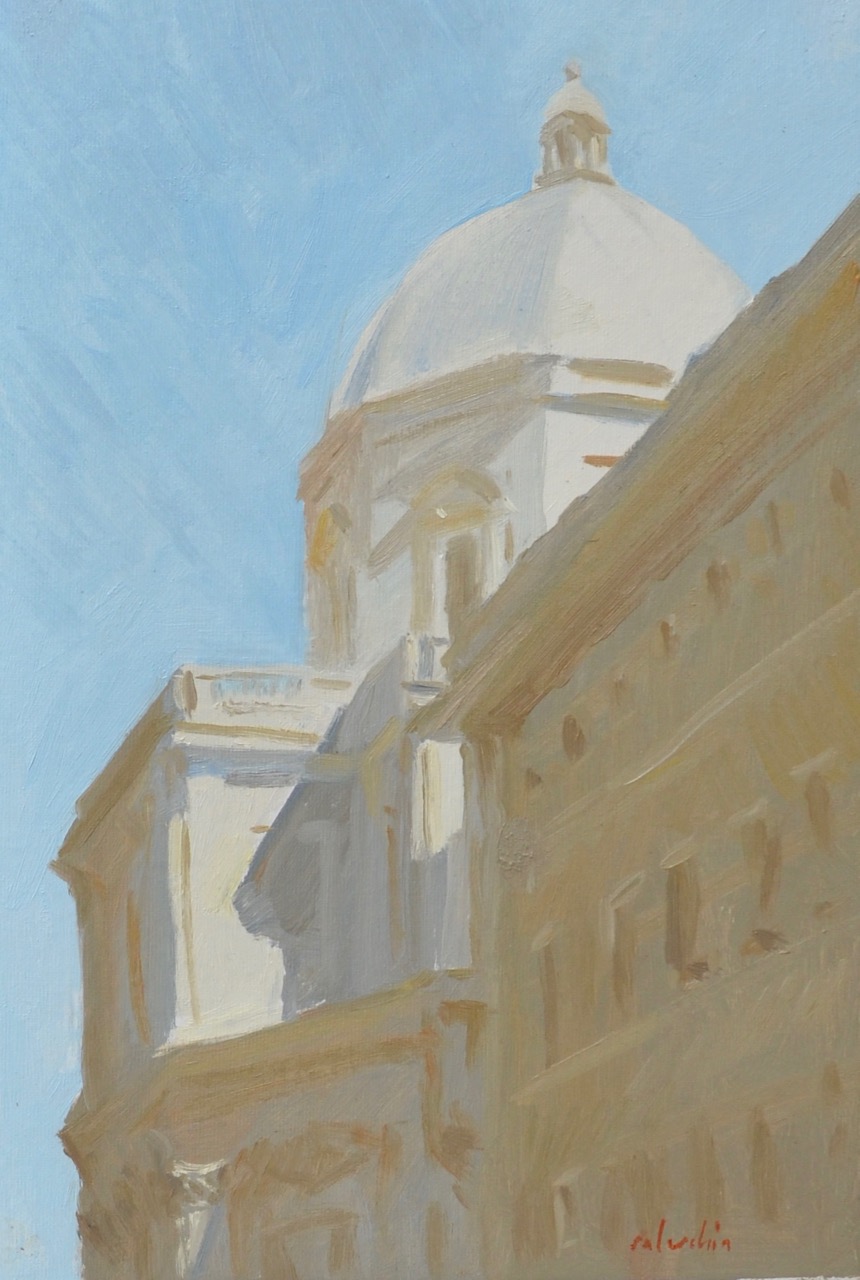
Santa Maria Maggiore iv 20×30 cm
There were more pictures of Santa Maria Maggiore besides, but as with most experiments there were a number of casualties along the way.
 hugo saloschin